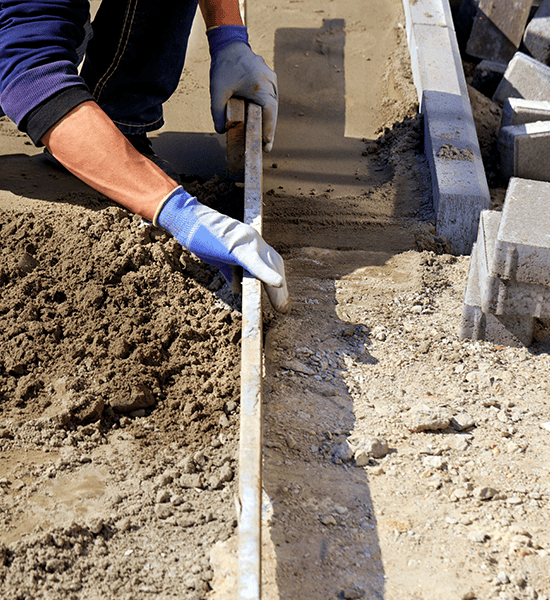
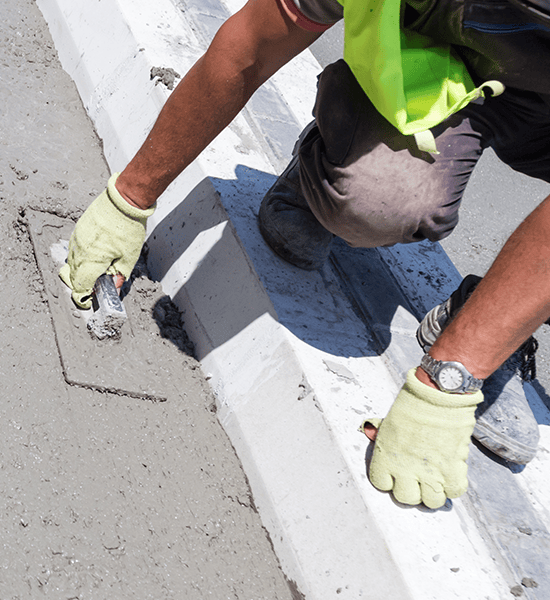
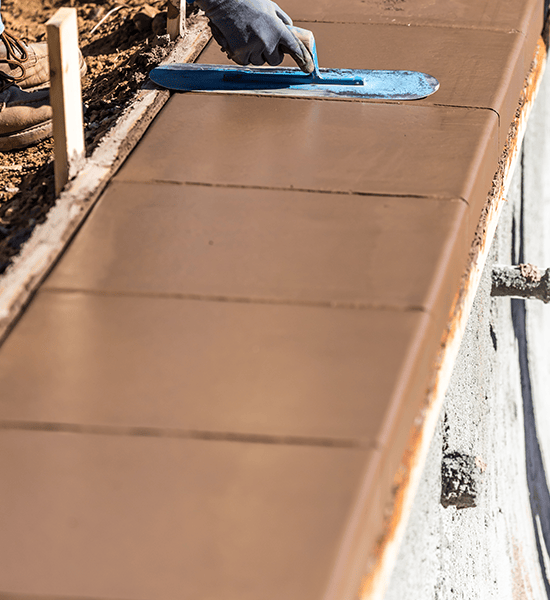
Curb work for homes, brownstones, co-ops, and condo buildings across Manhattan, Brooklyn, Queens, the Bronx, and Westchester. We explain your options in plain English, put everything in a written contract, and treat your property like our own from the first visit to the final walkthrough.
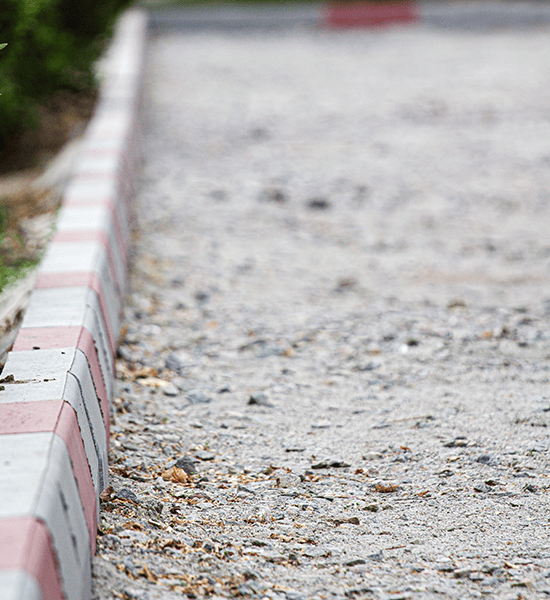
The curb in front of your home affects more than you might think. A broken or sunken curb lets water pool by your front steps, makes pulling into the driveway rough on your car, and gives visitors a trip hazard right at your front walk. It’s also one of the first things people notice about a house, whether they’re guests, neighbors, or future buyers.
Most homeowners hire a curb contractor once or twice in their lives, so we don’t assume you know how it works. We walk the frontage with you, explain what we see and what the options are, and give you a written contract that spells out the scope, the price, the payment schedule, and the expected dates. During the job, we protect your steps, gates, and plantings, keep the site safe for your family, and clean up completely before we leave.
A real conversation: we walk the curb with you and explain the options without jargon
Written contract: scope, price, payment schedule, and dates in writing before work starts
License on paperwork: our license number on the contract, as New York law requires
Permits handled: any required permits filed by us, not left to you
Care for your property: steps, gates, fences, and plantings protected during the work
Clean finish: site cleaned and a final walkthrough with you before we leave
Residential Properties We Serve
From a single-family home to a 100-unit co-op, every residential property has its own needs.
One- to Three-Family Homes
Curb repair and replacement for detached, semi-detached, and attached houses across the city.
Brownstones & Townhouses
Careful curb work in front of historic homes, with attention to stoops, areaways, and the look of the block.
Homes With Driveways
Curb and driveway apron work so cars enter smoothly without scraping or bottoming out.
Corner Lot Properties
Longer curb frontages on two streets, with work coordinated around the corner’s pedestrian crossings.
Co-op Buildings
Board-ready proposals, insurance certificates, and resident notices for cooperative buildings.
Condominium Associations
Curb work for condo boards and managing agents, scheduled to minimize disruption for owners.
What NYC Homeowners Say About Our Curb Work
The curb near our driveway was cracked and uneven, and it was starting to affect the appearance of the front of the house. They fixed it neatly and the result looks great.
Maria P.
We had new concrete edging installed along part of our residential property. The crew was respectful, kept everything tidy, and gave us exactly the look we wanted.
Joseph R.
Our front curb had several damaged sections from years of wear. The repair was done carefully and blends in well with the rest of the concrete. Very pleased with the work.
Chris D.
Why NYC Homeowners Choose Us
Hiring a contractor to work in front of your home takes trust. You’re letting a crew onto your property, often while you’re at work, and paying for something you may not know how to judge. We earn that trust the simple way: clear explanations, honest recommendations, everything in writing, and work you’ll be glad to come home to.
Plain-English Estimates
You'll understand exactly what you're paying for and why.
Everything in Writing
A proper written contract that meets New York home improvement law.
Respect for Your Home
Your property protected, your driveway access planned, and the site left clean.
Right-Sized Recommendations
The work your curb needs, not the most expensive option.
Residential Curb Work Across NYC & Westchester
We work in residential neighborhoods across four NYC boroughs and Westchester County.
What should a curb contractor's contract include in New York?
Under New York law, a home improvement contract must be in writing and signed by both parties. It should include the contractor’s name, address, phone number, and license number, the approximate start and completion dates, a description of the work and materials, the price, and any progress payment schedule. It must also tell you about your right to cancel and how your payments are protected.
Can I cancel a curb contract after signing?
Yes. New York law gives homeowners the right to cancel a home improvement contract until midnight of the third business day after signing. The cancellation must be given to the contractor in writing.
How do I check if a curb contractor is licensed?
In New York City, contractors doing residential home improvement work need a Home Improvement Contractor license from the Department of Consumer and Worker Protection, and you can look up any license on the DCWP website. In Westchester, home improvement contractors are licensed at the county level. Always ask for the license number and check it before signing.
Will I be able to use my driveway during the work?
We plan driveway access with you before the job starts. When new concrete is poured at the curb or driveway apron, it needs time to cure before it can handle a car, and we’ll tell you exactly when it’s safe to drive over it again.
What do co-op and condo boards need from a curb contractor?
Boards and managing agents usually need a written proposal for board review, certificates of insurance, and advance notice for residents. We provide all three and schedule the work to limit disruption to the building.
How much does residential curb work cost?
It depends on the length of your curb frontage, the type of work needed, whether a driveway apron is involved, and any permits required. After a free visit, we give you a written, itemized price with no surprises.