When a curb has sunk, shifted, or broken apart, patching it won’t last. We remove damaged concrete curbs and rebuild them from the base up across Manhattan, Brooklyn, Queens, the Bronx, and Westchester, setting the new curb to the correct line, height, and drainage.
Replacing and Rebuilding Curbs That Can't Be Saved
A curb is only as good as what’s underneath it. When the soil or base below a curb washes out, settles, or gets pushed up by roots, the curb follows: it drops below the street line, leans toward the road, or separates from the sidewalk. At that point the problem isn’t on the surface anymore, and no patch will fix it. The curb needs to come out.
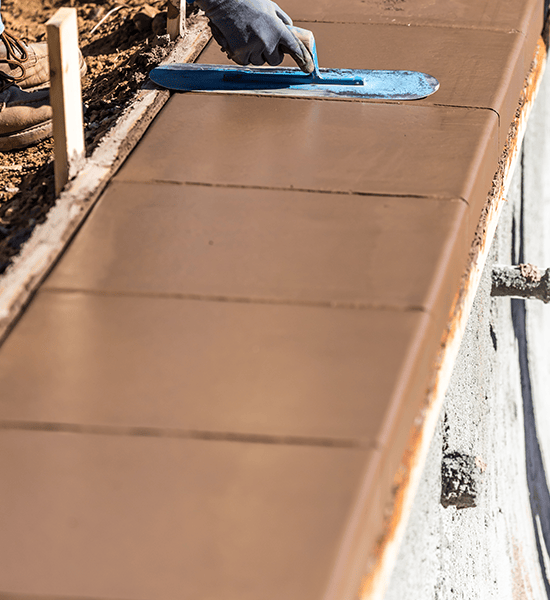
Our replacement work starts with removing the damaged curb and digging down to find out why it failed. We rebuild and compact the base, set forms to the correct line and grade, and pour a new curb that ties into the existing curb run on both sides. For steel-faced curbs, we reset reusable facing or install new facing as the job requires. Once the curb is in, we restore the sidewalk edge and the strip of roadway along the curb so the finished work sits flush and drains properly.
Replacement costs more than a repair, so we only recommend it when the curb actually needs it. If the damage turns out to be limited to cracks or broken edges, we’ll point you to concrete curb repair instead.
Inspection & measurements: we check how much curb has failed and why
Permit filing: we file the DOT permit as the registered contractor before work starts
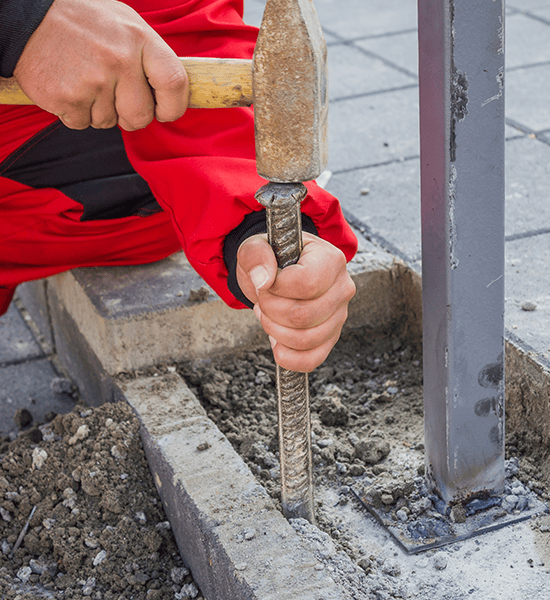
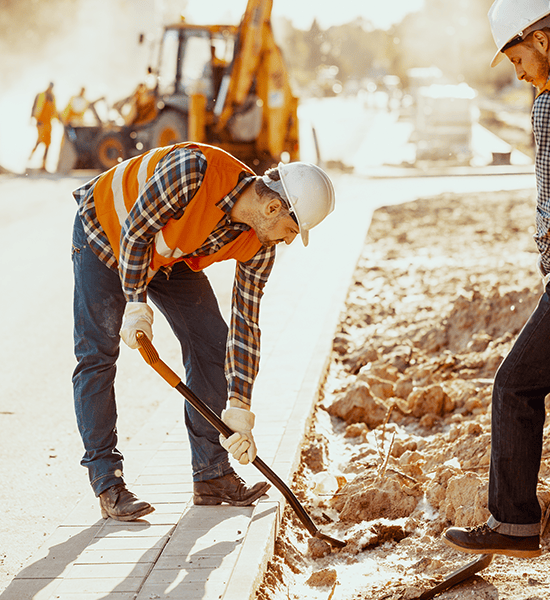
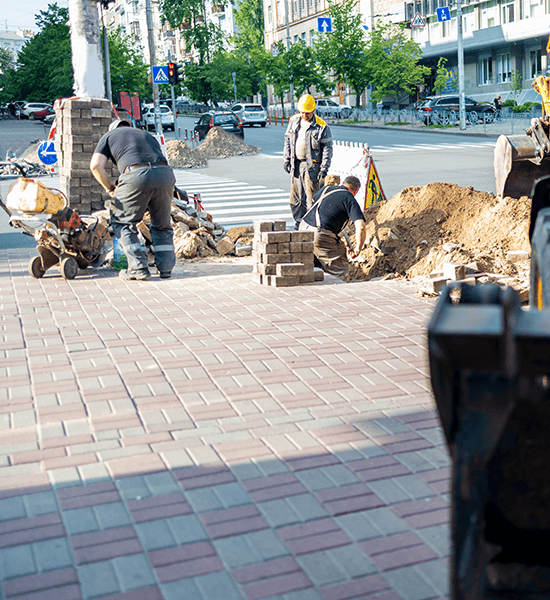
Removal & disposal: the damaged curb is saw-cut, broken out, and hauled away
Base rebuilding: failed soil and base material replaced and compacted
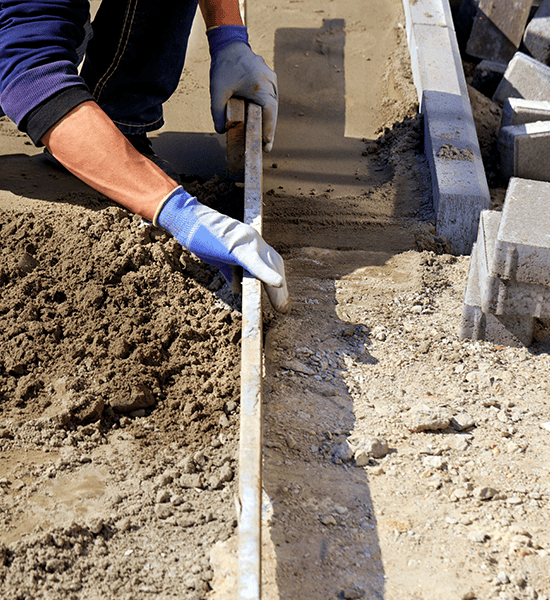
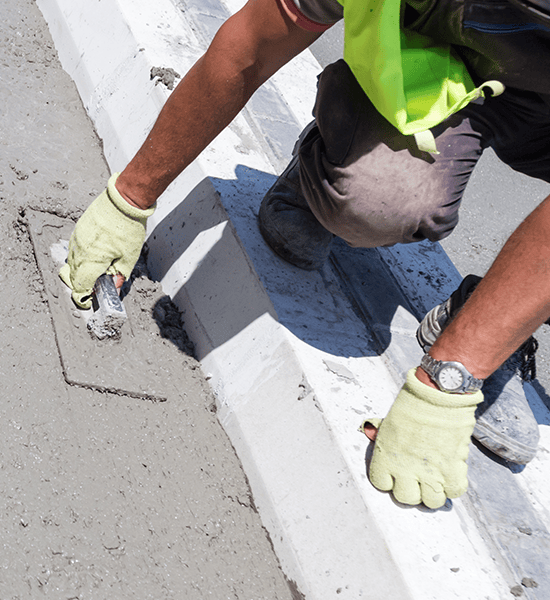
Forming & pouring: new curb set to line, height, and drainage, then poured and finished
Edge restoration: sidewalk and roadway edges restored and the site cleaned
Signs Your Curb Needs Replacement
These are the problems that go deeper than the surface, and they’re the ones where replacement is the only lasting fix.
Sunken or Settled Curbs
Curbs that have dropped below their original height, usually because the base underneath has washed out or compacted.
Tilted & Shifted Curbs
Curbs leaning toward the street or pushed out of line, often from vehicle impact or unstable soil.
Full-Depth Cracks
Cracks that run all the way through the curb, splitting it into loose pieces that move independently.
Tree Root Damage
Curbs lifted, cracked, or displaced by growing roots, which need to be removed and reset.
Widespread Deterioration
Curbs crumbling along most of their length, where repairing section by section would cost more than replacing.
Ponding & Drainage Problems
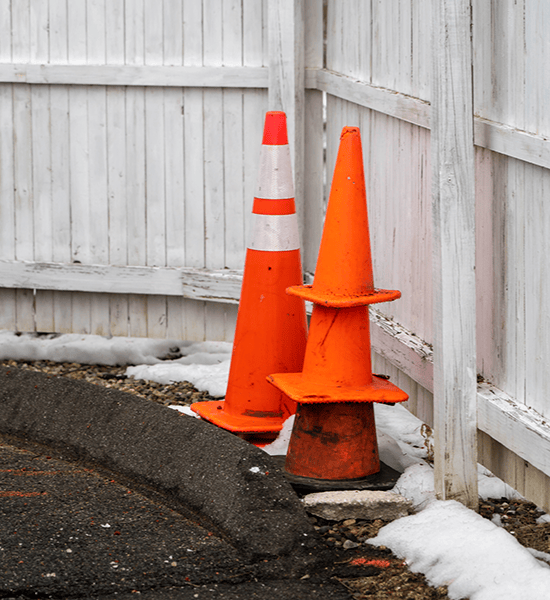
Curbs set at the wrong height that trap water along the gutter instead of sending it to the drain.
What Customers Say About Our Curb Replacements
Our old curb was badly deteriorated and patching was no longer helping. They removed the damaged concrete and installed a new curb that looks clean and properly aligned.
Kevin D.
We needed a full curb replacement along one side of our commercial property. The team handled the removal and new concrete work professionally and completed everything as discussed.
Thomas B.
The existing curb had large cracks and sections that were starting to collapse. The replacement came out much better than we expected and completely improved the edge of the property.
Mark L.
Why Choose Us for Curb Replacement in NYC
A new curb poured on a bad base will fail the same way the old one did. The difference between a curb that lasts decades and one that sinks again in a few years is almost entirely in the work you don’t see after the job is done: the excavation, the base, and the setting.
Rebuilt From the Base
We fix the cause of the failure, not just the concrete on top.
Line & Grade Matched
New curbs set to tie cleanly into the existing curb and street.
Permits Handled
We file DOT permits as the registered contractor, so you don't have to.
Complete Site Restoration
Sidewalk and roadway edges restored before we leave.
Curb Replacement Across NYC & Westchester
We replace and rebuild concrete curbs in four NYC boroughs and throughout Westchester County.
What's the difference between replacing and rebuilding a curb?
The terms overlap. Replacing usually means removing a damaged curb and pouring a new one in the same place. Rebuilding goes a step further: it also fixes the base underneath and corrects the curb’s height or alignment. For sunken or shifted curbs, we do both, because a new curb on a failed base won’t last.
How much does curb replacement cost in NYC?
Cost depends on how many linear feet need replacing, whether the curb is plain concrete or steel-faced, how much base work is needed, removal and disposal, permits, and restoring the sidewalk and roadway edges. We give you an itemized quote after measuring the curb on site.
Can you replace only part of a curb?
Yes. In most cases we replace only the failed sections and tie the new concrete into the existing curb on both sides, so you don’t pay to replace curb that’s still in good shape.
How long does curb replacement take?
Removal, base work, and pouring usually take a few days on site, depending on the length of curb. The new curb then needs time to cure before it takes heavy loads, and we’ll tell you when it’s ready.
Can you replace a steel-faced curb?
Yes. We replace steel-faced concrete curbs, reusing the existing steel facing where it’s in serviceable condition and installing new facing where it isn’t.