Cracked, chipped, or crumbling curbs don’t always need to be torn out. We repair damaged concrete curbs across Manhattan, Brooklyn, Queens, the Bronx, and Westchester, fixing the damage while the curb is still sound and saving you the cost of a full replacement.


Most curb damage starts small. A hairline crack lets water in, winter freezes it, and the crack widens. Road salt eats at the surface until it flakes away. A plow blade or a tire catches the edge and knocks a chunk loose. Caught early, all of this can be repaired. Left alone for a few NYC winters, the same curb often has to be removed and poured again.
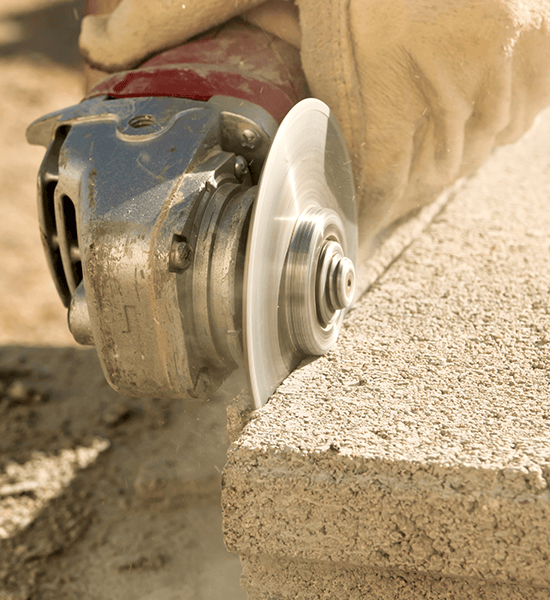
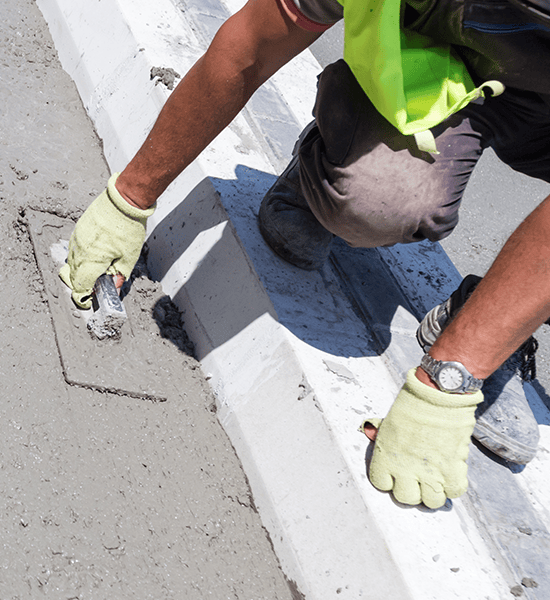
Our curb repair work focuses on curbs that are still structurally sound: the curb sits at the right height, isn’t shifting, and the damage is limited to cracks, broken edges, or surface deterioration. We cut out loose and weakened concrete, prepare the surface so new material bonds properly, and rebuild the damaged area with repair materials made for outdoor concrete in freeze-thaw conditions. Where the curb meets the sidewalk, we clean and reseal failed joints so water stops getting underneath.
Repair isn’t always the right answer, and we’ll tell you when it isn’t. If a curb has sunk, shifted, or cracked through its full depth, patching it only delays the problem. In those cases, concrete curb replacement is the better investment, and we’ll explain why during the inspection.
Our Curb Repair Includes:
Each type of damage has a different cause and needs a different fix. Here’s what we see most often on NYC curbs.
Cracks from shrinkage, age, or heavy loads, repaired and sealed before water and ice can widen them.
Edges broken off by tires, plows, and delivery trucks rebuilt to restore a clean, solid curb line.
Flaking, pitted surfaces caused by freeze-thaw cycles and road salt, removed and resurfaced down to sound concrete.
Open or crumbling joints between curb sections, or between the curb and sidewalk, cleaned out and resealed.
Localized damage from snow plows and vehicles repaired without replacing the entire curb run.
Concrete damage around the steel facing on steel-faced curbs assessed and repaired, and loose facing addressed where it’s still serviceable.
A curb repair only saves money if it lasts. Poorly bonded patches often fail after a winter or two, and then you pay for the job twice. We focus on the details that decide whether a repair holds: proper surface prep, the right materials, and an honest call on whether repair is the right fix at all.
We recommend repair whenever the curb can be saved, not the bigger job.
Repair materials chosen to handle NYC freeze-thaw cycles and road salt.
We check whether your repair needs a DOT permit and file it when it does.
Most curb repairs are small jobs, and we schedule them that way.
We repair concrete curbs throughout four NYC boroughs and Westchester County.
Curb repairs from Riverdale to Throggs Neck.
From Williamsburg down to Bay Ridge and Sheepshead Bay.
Residential blocks and commercial frontages, Inwood to the Financial District.
Astoria, Flushing, Bayside, Jamaica, and everywhere in between.
Yonkers, New Rochelle, White Plains, and surrounding towns.
Need more than a repair? We handle every stage of curb work in NYC.


If the curb is still at the right height, isn’t moving, and the damage is limited to cracks, chipped edges, or surface flaking, it can usually be repaired. If it has sunk, tilted, shifted, or cracked through its full depth, replacement is the longer-lasting fix. We’ll tell you which one you need during a free inspection.
It depends on the length of curb involved, the type and depth of damage, whether the curb is plain concrete or steel-faced, and whether a permit is needed. Repair almost always costs less than replacement, which is why catching damage early matters. We give you an itemized quote after inspecting the curb.
A properly prepared and bonded repair can last for many years. Repairs that fail quickly are usually the result of skipped surface prep or the wrong material, which is why we don’t cut corners on either.
The main causes are freeze-thaw cycles, road salt, vehicle and plow impacts, and water getting in through open joints. Once water gets into a crack, each winter makes the damage worse.
Concrete repairs need suitable temperatures to cure properly. We schedule repairs for workable weather and let you know if waiting a few weeks will give you a better, longer-lasting result.